


The post-workout window is defined as the period after exercise when your body is primed to absorb nutrients for muscle repair, glycogen replenishment, and growth. The industry term for this concept is the anabolic window, and it has been misrepresented for decades. The original claim said you had 30 minutes to slam protein or your gains were gone. That claim is dead. The International Society of Sports Nutrition (ISSN) and researchers like Brad Schoenfeld now confirm the real window is 1–4 hours wide, depending on your training state, meal history, and goals. Muscle protein synthesis (MPS) stays elevated long after you rack the bar. Your job is to feed it right, not feed it fast.
What does the post-workout window mean scientifically?
The 30-minute anabolic window originated from endurance exercise research, not resistance training. That distinction matters. Endurance athletes deplete glycogen at a rate that demands rapid carbohydrate replacement, especially when racing or training twice daily. Resistance training is a different animal. MPS stays elevated and your muscles remain sensitive to nutrients for far longer.
Brad Schoenfeld, one of the most cited researchers in hypertrophy science, states the narrow anabolic window is a misinterpretation of endurance data, not a rule for lifters. That reframing changes everything about how you should approach post-workout nutrition.
“The window of opportunity for post-exercise nutrition is much broader than previously thought. Total daily protein intake is the primary driver of muscle protein synthesis, not the precise timing of consumption.” — Brad Schoenfeld, via HFE Nutrition
Current consensus places the optimal post-exercise timing at 1–2 hours after training, with flexibility extending to 4 hours based on individual factors. That flexibility is not an excuse to skip your post-workout meal. It means you can train hard, shower, and eat a real meal without panicking.
| Claim | What Research Actually Shows |
|---|---|
| 30-minute window is mandatory | Consensus now supports a 1–4+ hour window |
| Missing the window kills gains | MPS stays elevated for up to 24 hours post-training |
| Timing beats total intake | Total daily protein is the strongest predictor of muscle growth |
| Carbs post-workout are optional | Carbs trigger insulin, which drives amino acid uptake |
Muscle protein synthesis remains elevated for up to 24 hours after resistance training. That means your body is still actively repairing and building muscle the next morning. Immediate post-workout feeding matters less than most gym culture suggests.
Does timing or total daily intake drive muscle growth?
Total daily protein intake is the strongest predictor of muscle growth. A meta-analysis of 23 randomized controlled trials involving 525 participants showed that nutrient timing had a marginal effect on hypertrophy when total protein was controlled. That is not a small study. That is hard evidence.
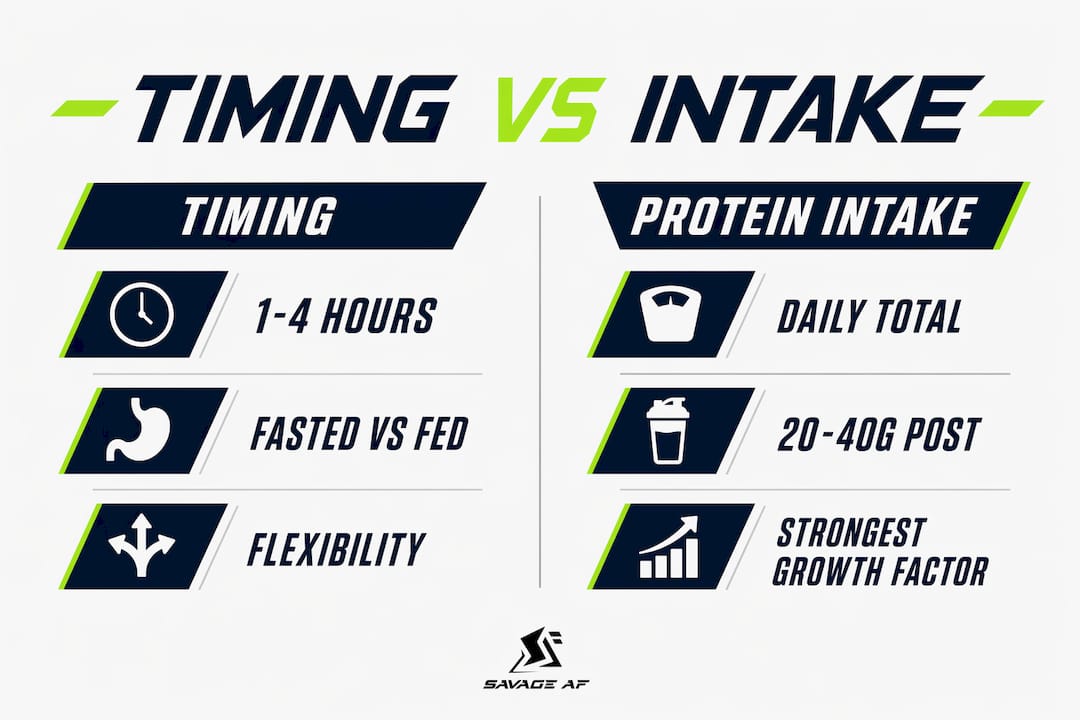
Your body does not care whether you ate your protein at 6:15 PM or 7:30 PM. It cares whether you hit your daily targets. Metabolic recovery is a 24-hour process, not a 30-minute sprint.
That said, timing is not completely irrelevant. It becomes more critical in specific situations.
- Multiple daily training sessions: If you train at 7 AM and again at noon, you need to replenish glycogen fast. Your second session depends on it.
- Fasted training: Training without eating beforehand accelerates the need for post-workout nutrients. Your body has no buffer.
- High-volume endurance work: Marathoners, cyclists, and combat athletes burn through glycogen at a rate that demands faster replacement.
For the average lifter training once a day with a pre-workout meal in the system, timing flexibility is fine. Hit your macros across the day. Stay consistent. That is what moves the needle.
Pro Tip: If you trained in a fed state, you have a wider post-workout window. If you trained fasted, tighten it up and eat within 60 minutes.
What should you actually eat after a workout?
Post-workout nutrition has three non-negotiable components: protein, carbohydrates, and timing within a reasonable window. Get all three right and your recovery accelerates. Skip one and you leave gains on the table.
Protein: the foundation of repair
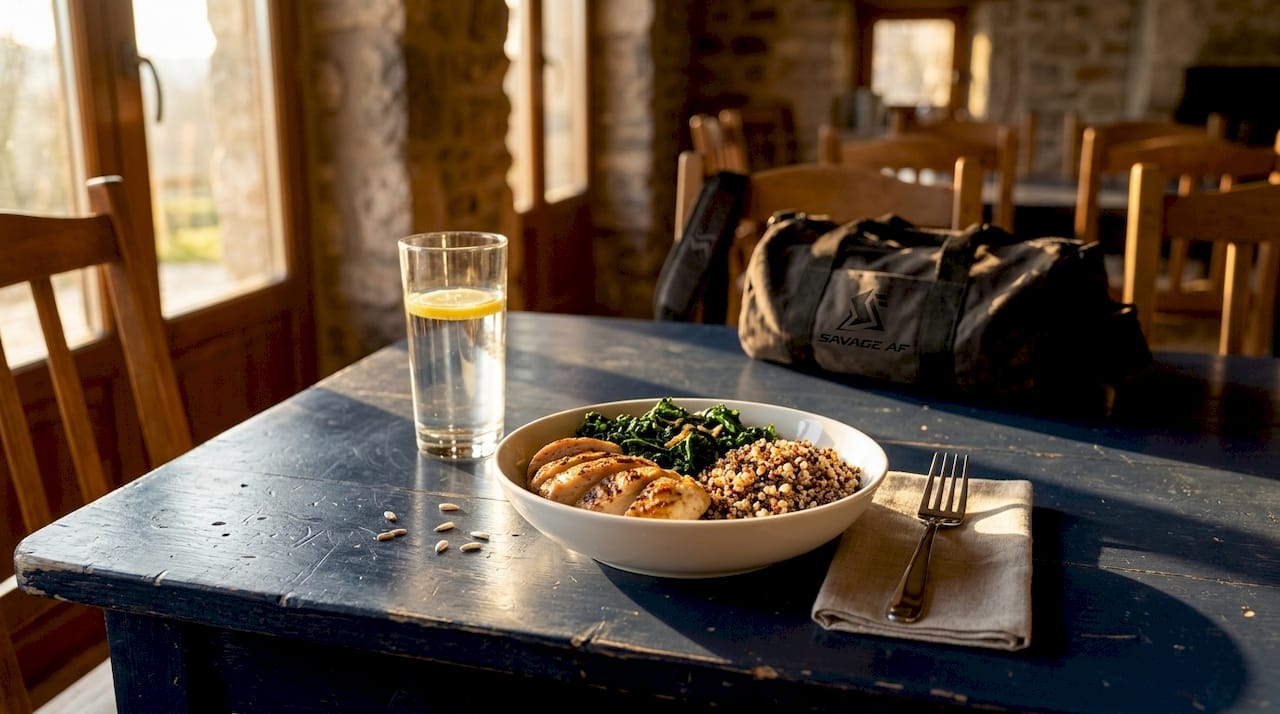
Consume 20–40g of high-quality protein after training. Whey protein isolate hits fast and delivers a complete amino acid profile. Whole food sources like chicken, eggs, or Greek yogurt work just as well if you can eat within the window. The goal is to flood your bloodstream with amino acids while MPS is elevated.
Carbohydrates: the overlooked weapon
Post-workout carbohydrates trigger an insulin response that shuttles amino acids directly into muscle tissue. Skipping carbs post-workout is one of the most common mistakes lifters make. It slows amino acid uptake and delays glycogen replenishment. A 3:1 carb-to-protein ratio works well in practice. That means roughly 60g of carbs paired with 20g of protein.
Effective post-workout meal options include:
- Whey protein shake with a banana and oats
- Grilled chicken with white rice and steamed vegetables
- Greek yogurt with berries and honey
- Eggs with whole grain toast and fruit
- Cottage cheese with pineapple and a handful of pretzels
Fats: stop stressing about them
Eating fats in your post-workout meal does not impair recovery. Expert dietitians confirm that fat inclusion improves satiety and helps you stick to your nutrition plan long-term. Whole food meals with moderate fat are perfectly fine. Do not obsess over eating fat-free post-workout. Adherence beats perfection every time.
Pro Tip: If solid food feels impossible right after training, a protein recovery shake with fast carbs is your best bridge. Drink it within 60 minutes, then eat a full meal 1–2 hours later.
Who actually needs strict post-workout timing?
Not every athlete needs to sprint to the kitchen the second they drop the last plate. The importance of strict timing depends entirely on your training structure and daily schedule.
-
Two-a-day athletes. If you train twice in one day, the window between sessions is your recovery window. Glycogen replenishment and metabolic recovery must happen before session two. Eat within 30–45 minutes of finishing session one. No exceptions.
-
Fasted trainees. Training on an empty stomach means your body has no amino acid buffer. MPS is running without fuel. Eat protein and carbs within 60 minutes of finishing. Your muscles are waiting.
-
High-volume endurance athletes. Runners, cyclists, and fighters burning 800+ calories per session need rapid glycogen replacement. The anabolic window benefits this group more than any other.
-
Once-a-day recreational lifters. You have the most flexibility. As long as you hit your daily protein and carb targets, eating within 1–2 hours of training is sufficient. No stress required.
-
Competitors in contest prep. Precise nutrient timing supports body composition goals when calories are restricted. Every meal counts more when you are running a deficit.
The psychological cost of obsessing over timing is real. Athletes who stress over tight timing often show poorer adherence to their overall nutrition plan. A broader peri-workout window of 4–6 hours reduces that pressure and keeps you consistent. Consistency is the actual weapon. Know your training category and plan accordingly.
Key takeaways
The post-workout window is a flexible 1–4 hour period after training, and total daily protein intake drives muscle growth more than precise timing ever will.
| Point | Details |
|---|---|
| Window is 1–4 hours wide | The 30-minute anabolic window myth is debunked by current research. |
| MPS lasts up to 24 hours | Muscle protein synthesis stays elevated long after training ends. |
| Total intake beats timing | A meta-analysis of 23 RCTs confirms daily protein is the top hypertrophy driver. |
| Carbs are non-negotiable | Post-workout carbs trigger insulin that drives amino acids into muscle. |
| Timing matters most for specific athletes | Two-a-day trainers and fasted athletes need tighter post-workout windows. |
The no-excuses truth about post-workout nutrition
I have trained with athletes who would sprint to their gym bag mid-cooldown, terrified of missing a 30-minute window. I have also trained with guys who ate a full meal two hours post-session and built just as much muscle. The difference was not timing. It was total intake and consistency.
Here is what I have learned after years of watching people chase the perfect post-workout protocol: the obsession with timing is often a distraction from the harder work of hitting your daily macros. You can dial in the perfect post-workout shake and still under-eat protein across the day. That is where most people actually fail.
The science on protein’s role in recovery is clear. Get 20–40g of quality protein after training. Pair it with carbs. Do not stress if it takes you 90 minutes to get there. What matters is that you do it, every single day, without excuses.
The athletes I respect most are not the ones who time their shakes to the second. They are the ones who show up, train hard, eat right, and repeat. That is the real anabolic window. It is called discipline, and it is 24 hours long.
— Ronnie Savoie
Fuel your recovery the savage way
You train like a savage. Your post-workout nutrition should match that energy. Savageaf builds supplements for athletes who refuse to leave gains on the table.
The Performance Stack combines pre-workout, BCAAs, and creatine into one recovery-focused bundle built for serious athletes. It covers your energy, muscle repair, and strength needs without the guesswork. Pair it with Whey AF Vanilla Protein Isolate for a complete post-workout protocol that hits your protein targets fast. No filler. No fluff. Just the fuel your body demands after a brutal session. Hit the stack, own your recovery, and come back stronger every time.
FAQ
What does the post-workout window mean?
The post-workout window is the period after exercise when your body is most receptive to nutrients for muscle repair and glycogen replenishment. Current research supports a flexible 1–4 hour window, not the outdated 30-minute rule.
How long does the anabolic window actually last?
Muscle protein synthesis remains elevated for up to 24 hours after resistance training. This means your body stays primed for muscle repair well beyond the immediate post-exercise period.
What should i eat after a workout for muscle growth?
Consume 20–40g of high-quality protein and 0.5–1g of carbohydrates per kilogram of body weight after training. A 3:1 carb-to-protein ratio, such as 60g carbs with 20g protein, supports both glycogen replenishment and muscle repair.
Does post-workout timing matter more than total daily protein?
A meta-analysis of 23 randomized controlled trials showed total daily protein intake is the strongest predictor of muscle growth. Precise timing has a marginal effect when daily intake is adequate.
Who benefits most from strict post-workout nutrient timing?
Athletes training multiple sessions daily or in a fasted state benefit most from tight post-workout timing. Once-a-day trainees with a pre-workout meal have a wider window and can eat within 1–2 hours without compromising recovery.


