


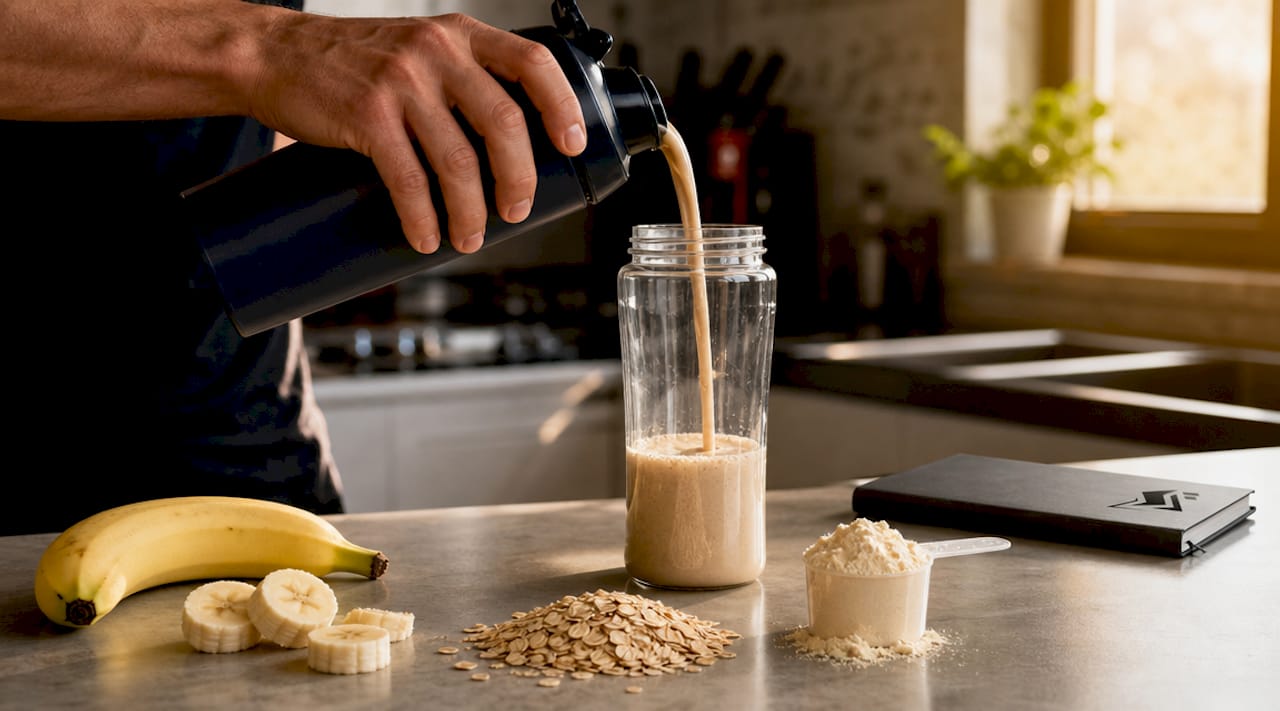
A recovery shake is a post-workout drink engineered to speed muscle repair and replenish nutrients depleted during training by delivering protein, carbohydrates, and fluids in a fast-digesting format. The role of recovery shake after gym sessions is not magic timing or some sacred ritual. It is a practical, evidence-backed tool that helps you hit your daily macronutrient targets, reduce muscle breakdown, and show up ready to destroy your next session. Whether you are a gym warrior grinding five days a week, a hard rock performer who trains to stay explosive on stage, or a two-a-day athlete who cannot afford slow recovery, understanding post-workout nutrition separates the serious from the sloppy.
What does science actually say about recovery shake timing and protein?
Gym culture has sold you a lie for decades. The so-called “anabolic window” of 30 minutes post-workout is not supported by current research for most lifters. MacroFactor confirms that rigid 30-minute timing is unsupported for once-daily lifters, and that shakes primarily help with consistency in meeting total daily intake. That means if you trained at 6 a.m. and ate a solid breakfast by 7:30 a.m., you did not miss your window. You are fine.
What actually matters is protein distribution across the day. The International Society of Sports Nutrition (ISSN) recommends spreading protein every 3 to 4 hours for hypertrophy, because muscles remain sensitive to protein for up to 24 hours post-training. Obsessing over the exact minute you drink your shake is less productive than making sure you hit your total daily protein target.
That said, dose per serving is not negotiable. Research confirms 20 to 40 grams of protein per meal effectively stimulates muscle protein synthesis (MPS). Leucine is the trigger amino acid that flips the MPS switch, and whey protein isolate delivers the highest leucine concentration of any common protein source. This is why whey remains the gold standard in recovery shakes, not marketing. Biology.
There are two scenarios where timing does shift the math. If you train fasted, meaning no food for three or more hours before your session, immediate shake consumption becomes more critical to maintain amino acid availability and prevent excessive muscle breakdown. The same applies if you are running back-to-back sessions with less than four hours between them.
- Train fasted: drink your shake within 30 to 45 minutes post-session
- Train fed (meal within 2 hours before): you have a 1 to 2 hour window post-workout
- Double sessions: prioritize carbs first, protein second, minimize fat immediately after
- Daily protein target: aim for 0.7 to 1 gram per pound of bodyweight spread across meals
Pro Tip: If you train in the morning and cannot stomach solid food right after, a whey isolate shake with fast-digesting carbs is the most practical way to start recovery without forcing a meal you will not finish.
How do carbs and fluids in recovery shakes fuel your next session?
Protein gets all the attention, but carbohydrates are the unsung weapon in your post-workout arsenal. Glycogen, the stored form of carbohydrate in your muscles, is your primary fuel during high-intensity training. When it runs low, performance crashes. Hard.
Carb timing matters most when your recovery window is short. Rapid carbohydrate intake after a workout is critical primarily when recovery time is very limited, such as two-a-day training scenarios. If you have 24 hours before your next session, total daily carb intake matters more than the exact post-workout timing.
Here is how to use carbs in your recovery shake strategically:
- Short recovery window (under 8 hours): Target 0.5 to 1.2 grams of carbs per kilogram of bodyweight immediately post-workout to accelerate glycogen replenishment.
- Standard recovery (24 hours): Focus on total daily carbohydrate intake. Your post-workout shake can include 30 to 60 grams of carbs, but it does not need to be the entire day’s carb load.
- Double sessions: Think carbs first. For athletes with double training sessions, prioritize carbs immediately post-workout and minimize fat intake to optimize glycogen restoration speed.
- Hydration alongside carbs: Post-workout hydration of 500 to 750 ml of water is critical alongside protein and carbs to restore performance capacity. Even mild dehydration impairs recovery and tanks your next training session.
- Sodium replacement: Sodium lost through sweat drives fluid retention in cells. Adding an electrolyte blend or sodium-containing foods alongside your shake accelerates rehydration more effectively than water alone.
One nuance worth knowing: adding protein to carbs post-exercise only enhances glycogen synthesis if your carb intake is insufficient. Protein does not accelerate glycogen restoration when carbs are already adequate. Load your shake with carbs first if glycogen replenishment is the priority.
Recovery shakes vs. whole food meals: when to choose each
This is not a war. It is a strategy call. A whole-food meal within 1 to 2 hours of training matches the benefit of an immediate protein shake for most lifters. Chicken, rice, and vegetables will do the job just as well as a shake, given enough time.
But shakes win in specific situations. Liquid protein peaks amino acids in blood quickly, making shakes the superior choice when speed and digestibility matter. After a brutal session, your appetite is often suppressed. Forcing down a full meal feels like punishment. A shake goes down in 60 seconds and starts working immediately.
| Scenario | Best choice | Why |
|---|---|---|
| Fasted training | Recovery shake | Immediate amino acid delivery without appetite requirement |
| Double sessions | Shake with fast carbs | Speed of glycogen replenishment is critical |
| Traveling or no kitchen access | Recovery shake | Convenience and portability win |
| Appetite suppressed post-workout | Recovery shake | Liquid calories are easier to consume |
| Standard training, full day recovery | Whole food meal | Better micronutrient profile, fiber, and satiety |
| Long-term health and inflammation | Whole foods emphasized | Anti-inflammatory nutrients and microbiome support not found in supplements |
The risk of over-relying on shakes is real. Whole foods deliver fiber, micronutrients, and anti-inflammatory compounds that no protein powder replicates. Use shakes to fill gaps, not replace meals entirely. The athletes who recover fastest are the ones who nail their daily diet for muscle growth and use shakes as precision tools, not crutches.
Pro Tip: Stack your recovery shake with a piece of fruit for fast-digesting carbs, then follow with a whole food meal 60 to 90 minutes later. You get the speed of the shake and the nutritional depth of real food.
What are the ideal recovery shake ingredients and macros?
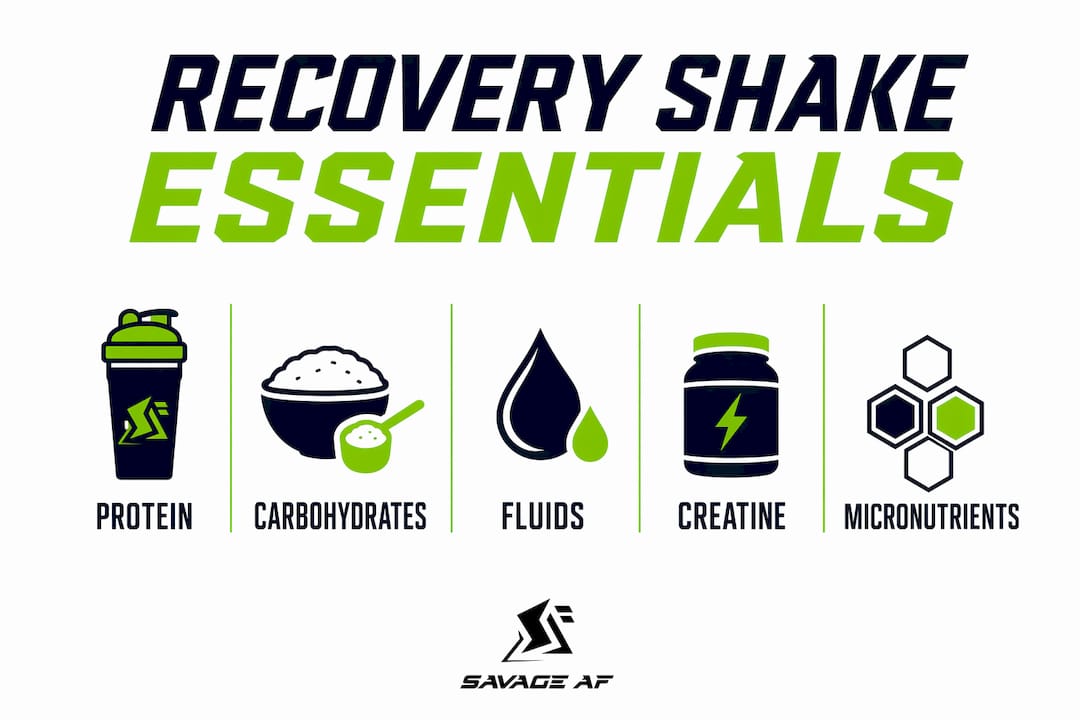
Not all shakes are built equal. The difference between a shake that accelerates recovery and one that just adds calories comes down to what is inside it. Here is what an effective recovery shake needs:
- Protein source: Whey isolate is the top choice. It digests fast, carries the highest leucine content per gram, and has a complete amino acid profile. For those avoiding dairy, a blend of pea protein and rice protein delivers a comparable amino acid spectrum. Aim for 25 to 40 grams of protein per serving. Check out protein sources for muscle growth to understand why source quality changes your results.
- Carbohydrate type: Fast-digesting carbs like dextrose, maltodextrin, or fruit-based sugars are ideal immediately post-workout when glycogen replenishment is urgent. For standard recovery windows, oat flour or banana-based carbs work well and add nutritional value.
- Fluids and electrolytes: Mix your shake with water, not milk, if speed of digestion is the goal. Add sodium, potassium, and magnesium through an electrolyte blend or naturally through coconut water as a base.
- Creatine: Creatine timing is less critical than daily intake, so adding it to your post-workout shake is a convenient way to stay consistent. Five grams per day is the standard effective dose. Learn more about daily creatine for performance and why consistency beats timing every time.
- BCAAs: If your shake already contains 25 to 40 grams of whey isolate, additional BCAAs are redundant. Whey already delivers leucine, isoleucine, and valine in effective doses.
- What to avoid: Excessive added sugars beyond your carb target, artificial fillers, and proprietary blends that hide ingredient doses. If you cannot read the label and know what each ingredient does, skip it.
The protein timing for gym performance matters less than the quality and completeness of what you put in your shake. Build it right, and it does the work.
Key takeaways
A recovery shake’s primary role is to conveniently deliver protein, carbohydrates, and fluids to support muscle repair and glycogen replenishment, with timing mattering most for fasted training and double sessions.
| Point | Details |
|---|---|
| Timing is flexible for most | The anabolic window is 1 to 2 hours, not 30 minutes; daily intake matters more than exact timing. |
| Protein dose drives results | 20 to 40 grams of whey isolate per serving effectively stimulates muscle protein synthesis. |
| Carbs are critical for double sessions | Target 0.5 to 1.2 g/kg of carbs post-workout when your next session is within 8 hours. |
| Shakes fill gaps, not replace meals | Whole foods deliver micronutrients and fiber that shakes cannot replicate; use both strategically. |
| Hydration is non-negotiable | 500 to 750 ml of water post-workout alongside your shake restores performance capacity. |
Why I stopped stressing about shake timing and started winning
by Ronnie Savoie
I spent two years obsessing over the 30-minute window. Sprinting to my gym bag before the sweat dried, choking down a shake in the locker room like my gains would evaporate if I waited. That mentality is exhausting and, more importantly, wrong.
What actually moved the needle for me was locking in total daily protein, distributing it across four to five meals, and using my post-workout shake as a precision tool for specific situations. Fasted morning sessions? Shake immediately. Back-to-back training days? Carb-heavy shake right after, real food 90 minutes later. Standard session with a meal incoming? Relax. Eat real food.
The biggest mistake I see hardcore athletes make is treating shakes as a substitute for a real nutrition strategy. You cannot out-supplement a garbage diet. Shakes are weapons in your arsenal, not the whole armory. The athletes who recover fastest are the ones who eat with intent every single day and use shakes to fill the gaps that real life creates.
If you train with the intensity this lifestyle demands, whether that is the gym, the stage, or both, your recovery nutrition needs to be as dialed-in as your training. No excuses, no shortcuts, no winging it.
— Ronnie Savoie
Fuel your recovery the Savageaf way
You train without apology. Your recovery nutrition should match that same energy. Savageaf builds supplements for people who do not cut corners, and the post-workout stack starts with clean, high-quality whey protein isolate that delivers the leucine and amino acid profile your muscles demand after a brutal session.

Whether you need a straight whey isolate to anchor your recovery shake or a full performance supplement stack that covers protein, creatine, and performance support in one move, Savageaf has you covered. No fillers, no fairy-dust doses, no excuses. Check out the full Savageaf supplement line and build a recovery protocol that matches the intensity you bring every single day. Your next session starts the moment this one ends.
FAQ
What is a recovery shake and when should you drink it?
A recovery shake is a post-workout drink containing protein, carbohydrates, and fluids designed to speed muscle repair and glycogen replenishment. Drink it within 1 to 2 hours of training, or immediately if you trained fasted or have another session within 8 hours.
How much protein should a recovery shake contain?
Research confirms 20 to 40 grams of protein per serving effectively stimulates muscle protein synthesis. Whey isolate is the preferred source due to its high leucine content and fast digestion rate.
Do recovery shakes replace whole food meals?
No. Recovery shakes fill nutritional gaps and offer speed and convenience, but whole foods deliver fiber, micronutrients, and anti-inflammatory compounds that supplements cannot replicate. Use both strategically.
Does creatine belong in a recovery shake?
Yes, adding creatine to your post-workout shake is an effective delivery method. Creatine timing matters less than daily consistency, so mixing five grams into your shake keeps your intake on track without extra steps.
Are carbs in a recovery shake necessary?
Carbs are critical when your next training session is within 4 to 8 hours, targeting 0.5 to 1.2 grams per kilogram of bodyweight post-workout. For standard 24-hour recovery windows, total daily carbohydrate intake matters more than immediate post-workout timing.


