


Whey protein is defined as a fast-absorbing, complete protein derived from milk during the cheese-making process, delivering all nine essential amino acids your muscles need to grow and recover. The three primary forms are concentrate (70–80% protein), isolate (90%+ protein), and hydrolyzed (enzymatically pre-digested). For most serious gym-goers, whey concentrate is the best value play. It delivers comparable protein quality to isolate at a fraction of the cost, and brands like ON Gold Standard have built their reputation on blended formulas that prove you don’t need to spend top dollar to build elite muscle.
1. What are the types of whey protein explained?
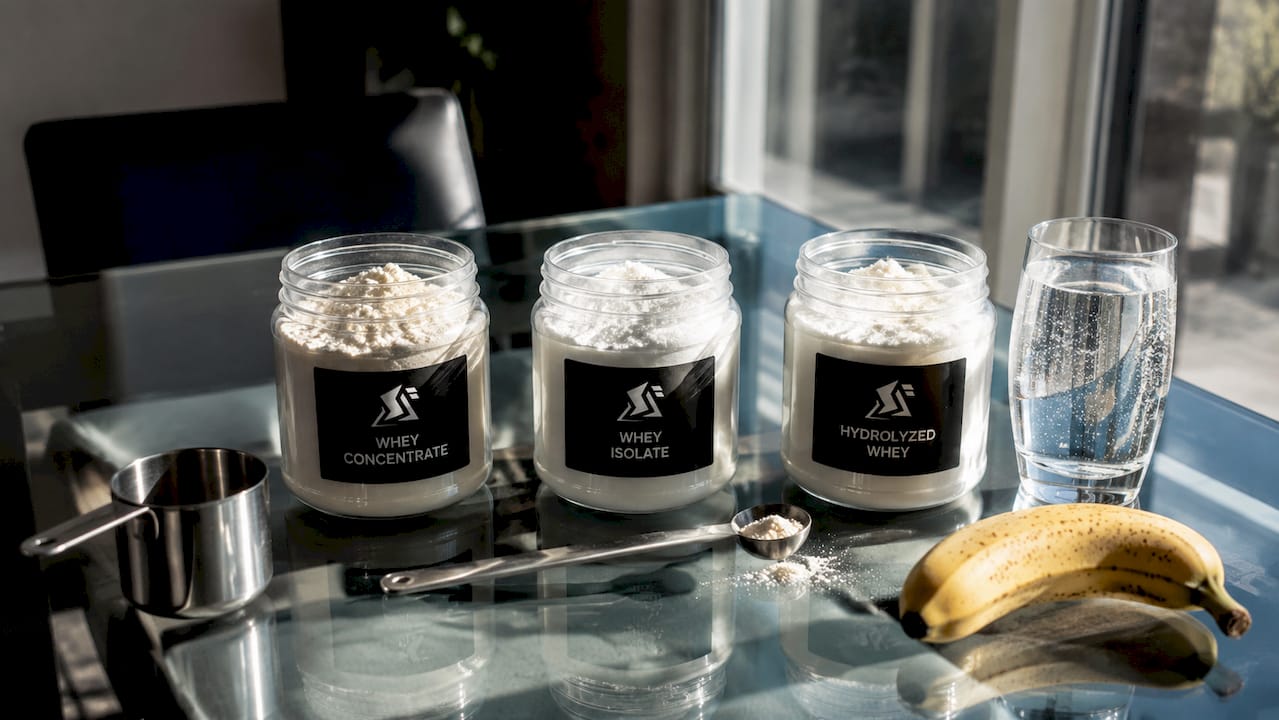
The three forms of whey protein differ in how they are processed, what gets filtered out, and who benefits most from each. Concentrate is the least processed, isolate goes through additional filtration, and hydrolyzed is enzymatically broken down into smaller peptides. Each form hits different price points, digestion profiles, and performance targets. Knowing which one fits your goals stops you from wasting money on marketing hype.
2. Whey protein concentrate: the best value for most lifters
Whey protein concentrate is the least filtered form of whey, retaining 70–80% protein alongside natural fats and lactose. That sounds like a downside until you realize those fats and carbohydrates contribute to the creamier texture and richer taste that makes concentrate shakes genuinely enjoyable to drink. A 30g serving typically delivers 20–25g of protein depending on brand and formula.
The cost advantage is real. Concentrate runs cheaper than isolate and hydrolyzed across the board, making it the go-to for athletes who train hard and eat a lot of protein daily. Spending less per serving means you can hit your protein targets consistently without gutting your supplement budget.
One myth worth killing: concentrate is not lower quality protein. Protein quality stays consistent across whey types. A high-quality concentrate from a reputable brand outperforms a cheap, poorly sourced isolate every single time. The amino acid profile, including leucine concentration, remains strong enough to trigger muscle protein synthesis effectively.
The one real consideration is lactose. Concentrate contains more lactose than isolate, so if your stomach protests after a shake, that’s your signal to look elsewhere. Most people with mild sensitivity tolerate concentrate just fine, but those with diagnosed lactose intolerance should proceed carefully.
Key advantages of whey concentrate:
- Most affordable per serving
- Creamier taste and better mixability
- Comparable amino acid profile to isolate
- Ideal for bulking phases or athletes without lactose sensitivity
- Works well in blended formulas alongside isolate
Pro Tip: Start with concentrate before spending extra on isolate or hydrolyzed. If your digestion handles it and your performance is strong, you have zero reason to upgrade.
3. How whey isolate differs and when it’s worth the higher price
Whey protein isolate goes through additional filtration that strips out most of the fat and lactose, pushing protein content to 90% or above. That extra processing is exactly why isolate costs more and why it earns its place for specific athletes in specific situations.
The near-zero lactose content makes isolate the go-to for anyone with lactose intolerance or a sensitive gut. You get the full muscle-building benefit of whey without the bloating, cramping, or bathroom emergencies that can derail your training day. Competitive bodybuilders in a cutting phase also gravitate toward isolate because every gram of fat and carbohydrate matters when you’re shredding down to stage weight.
The texture difference is noticeable. Isolate mixes thinner than concentrate, which some athletes prefer in a post-workout shake where they want something light and fast. The taste is slightly less rich, but quality brands mask this well with flavoring. Savageaf’s Whey AF Vanilla Isolate is a direct example of a product that nails the balance between purity and drinkability.
Who benefits most from isolate:
- Athletes with lactose intolerance or digestive sensitivity
- Competitive bodybuilders in a calorie-restricted cut
- Anyone tracking macros tightly and needing minimal fat and carbs per serving
- Post-workout windows where a lighter, faster-digesting shake is preferred
4. The truth about hydrolyzed whey: benefits, drawbacks, and who really needs it
Hydrolyzed whey is whey protein that has been enzymatically pre-digested into smaller peptides, which means amino acids hit your bloodstream faster than with concentrate or isolate. That sounds like a serious performance edge. The reality is more complicated.
Faster absorption does not translate into meaningfully better muscle hypertrophy when your overall diet is dialed in. The difference in muscle protein synthesis between hydrolyzed and concentrate is marginal for the vast majority of athletes. Your body is not a machine that breaks down at the millisecond level of amino acid delivery. Total daily protein intake drives results far more than absorption speed.
The cost is brutal. Hydrolyzed whey runs 2–3 times the cost of concentrate, and the taste is genuinely difficult. The enzymatic breakdown process creates bitter compounds that manufacturers mask with heavy sweeteners and flavoring. That masking adds ingredients you may not want, and the taste still often falls short of concentrate or isolate.
“Hydrolyzed whey’s high cost rarely justifies its purchase for average lifters despite marketing claims.” — Suppreview, 2026
When hydrolyzed whey actually makes sense:
- Elite or professional athletes where marginal gains matter at a competitive level
- Individuals with severe digestive issues who cannot tolerate concentrate or isolate
- Post-surgery recovery scenarios where rapid amino acid delivery is clinically relevant
- Athletes with specific medical guidance recommending pre-digested protein
For everyone else, hydrolyzed is a premium price tag on a marginal upgrade. Spend that extra money on more food, better sleep, or a solid pre-workout.
5. Side-by-side comparison of concentrate, isolate, and hydrolyzed whey
The differences between whey protein forms come down to six factors: protein percentage, lactose content, fat content, absorption speed, taste, and price. Here’s how they stack up directly.
| Factor | Concentrate | Isolate | Hydrolyzed |
|---|---|---|---|
| Protein content | 70–80% | 90%+ | 80–90% |
| Lactose | Moderate | Near zero | Near zero |
| Fat content | Low to moderate | Very low | Very low |
| Absorption speed | Standard | Fast | Fastest |
| Taste and texture | Creamy, rich | Lighter, clean | Often bitter |
| Price per kg (approx.) | Most affordable | Mid to high | Highest |
| Best for | Most athletes, bulking | Lactose sensitivity, cutting | Elite athletes, digestive issues |
No form of whey delivers significantly better muscle-building results than another when total protein intake is sufficient. Amino acids appear in the bloodstream 60–90 minutes after ingestion regardless of whey type, which means the absorption speed gap between forms is narrower in practice than marketing suggests. The real differentiators are digestion tolerance, calorie goals, and budget.
Many top-selling products use blended formulas combining concentrate and isolate, like ON Gold Standard, to balance cost, taste, and purity. That approach often delivers the best of both forms without the premium price of pure isolate or hydrolyzed.
6. How to choose the right whey protein for your goals
Choosing between different whey protein forms is not complicated when you cut through the noise. Answer three questions: Can your stomach handle lactose? What is your calorie budget per serving? What is your actual supplement budget? The answers point you directly to the right form.
Follow this decision framework:
- You tolerate dairy well and want the best value. Go with concentrate. It delivers full protein quality, great taste, and the lowest cost per gram of protein.
- You are lactose intolerant or sensitive. Isolate is your form. Near-zero lactose means no gut drama, and the higher protein percentage keeps your macros clean.
- You are in a hard cut and every calorie counts. Isolate wins again. The stripped-down fat and carb content gives you maximum protein per calorie.
- You are bulking and want a shake that actually tastes like food. Concentrate or a concentrate-isolate blend hits the mark. Richer texture, more calories, and lower cost per serving.
- You have severe digestive issues or are a professional athlete chasing every marginal edge. Hydrolyzed is worth evaluating, but go in with realistic expectations.
Reading labels matters. Look for products where whey protein is the first ingredient, not a blend filler. Check the amino acid profile for leucine content specifically, since leucine is the primary trigger for muscle protein synthesis. Avoid products loaded with fillers, proprietary blends that hide dosages, or excessive sugar that inflates calorie counts without adding protein value.
Pro Tip: Test your tolerance by starting with a concentrate-based blend like ON Gold Standard before committing to a full tub of isolate or hydrolyzed. Your gut will tell you everything you need to know within a week.
Timing also plays a role in maximizing your choice. Pairing the right whey type with the right shake timing strategy amplifies your results without changing your formula.
Key takeaways
The best type of whey protein for most athletes is concentrate, because it delivers comparable protein quality to isolate and hydrolyzed at a significantly lower cost, with total daily protein intake driving muscle growth far more than which form you choose.
| Point | Details |
|---|---|
| Concentrate is best value | 70–80% protein, creamier taste, lowest cost per serving for most athletes. |
| Isolate suits specific needs | 90%+ protein, near-zero lactose, ideal for sensitive stomachs and cutting phases. |
| Hydrolyzed is rarely worth it | Fastest absorption but marginal real-world gains; costs 2–3x more than concentrate. |
| Total protein intake wins | Hitting your daily protein target matters more than which whey form you use. |
| Blends offer balance | Products combining concentrate and isolate deliver taste, purity, and value together. |
My no-nonsense take on whey protein types
I’ve watched too many athletes burn money on hydrolyzed whey because the label looked impressive. After years of training hard and dialing in nutrition, the conclusion is always the same: your total protein intake is the variable that moves the needle. Not the form. Not the absorption speed. Not the fancy enzymatic processing.
Concentrate is where I’d put most people’s money, full stop. It tastes better, costs less, and builds the same muscle when you’re eating right and training with intensity. Isolate earns its place for athletes with real lactose sensitivity or those in a strict calorie deficit. Hydrolyzed? Unless you’re a professional athlete or have a specific medical reason, you’re paying a premium for a marketing story.
The supplement industry loves complexity because complexity sells products. Keep it simple. Pick a quality brand, hit your protein targets daily, and put your energy into the training itself. That’s where the gains actually live.
— Ronnie Savoie
Fuel your gains with Savageaf’s whey protein lineup
Savageaf builds supplements for athletes who don’t make excuses. The Whey AF Vanilla Isolate delivers 90%+ protein purity in a formula designed for serious lifters who need clean macros and real flavor without compromise.
Whether you’re deep in a cut, pushing a bulk, or just refusing to let recovery slow you down, Savageaf has the protein formula built for your intensity. Check out the full performance supplement collection and find the whey that matches your goals. No fluff. No filler. Just fuel for the grind.
FAQ
What are the three main types of whey protein?
The three main types are concentrate (70–80% protein), isolate (90%+ protein), and hydrolyzed (enzymatically pre-digested). Each differs in processing level, lactose content, absorption speed, and price.
Which type of whey protein is best for muscle growth?
All three types support muscle growth equally when total daily protein intake is sufficient. Concentrate delivers the best value for most athletes, while isolate suits those with lactose sensitivity or strict calorie goals.
Is hydrolyzed whey protein worth the extra cost?
For most athletes, no. Hydrolyzed whey offers minimal muscle-building advantage over concentrate or isolate despite costing 2–3 times more. It suits professional athletes or those with severe digestive issues.
Can whey protein damage your kidneys?
No credible evidence shows that moderate whey protein use harms kidney or liver function in healthy individuals. Athletes with pre-existing kidney conditions should consult a doctor before supplementing.
What is the difference between whey isolate and concentrate in taste?
Whey concentrate produces a creamier, richer shake due to its retained fat content. Isolate mixes thinner and lighter, while hydrolyzed whey can taste bitter from the enzymatic breakdown process.


