


You step on the scale a week into creatine and see three extra pounds staring back at you. Panic sets in. You think you’re bloated, soft, puffy. You’re not. Understanding why creatine causes water retention is the difference between quitting on one of the most proven performance supplements ever studied and unlocking a physiological weapon that makes your muscles fuller, stronger, and more ready to grow. This isn’t a side effect. It’s the mechanism.
Table of Contents
- Key Takeaways
- Why creatine causes water retention at the cellular level
- Creatine water retention vs. the bloat you actually hate
- Loading, dosing, and how timing affects water weight
- The performance and anabolic payoff of creatine hydration
- My take: creatine water retention is a weapon, not a weakness
- Fuel your gains with Savageaf creatine
- FAQ
Key Takeaways
| Point | Details |
|---|---|
| Creatine pulls water into cells | Creatine acts as an osmolyte, drawing water inside muscle fibers, not under your skin. |
| Scale weight is not body fat | Early weight gain of 1 to 3 kg reflects intracellular water, not fat or subcutaneous bloating. |
| Loading speeds up water retention | A loading phase causes faster saturation and more noticeable scale changes than maintenance dosing. |
| Cell swelling triggers muscle growth | Water-swollen muscle cells activate anabolic signals, including the mTOR pathway, that drive protein synthesis. |
| Bloat has other causes | Sodium, hormones, and alcohol drive subcutaneous puffiness. Creatine does not. |
Why creatine causes water retention at the cellular level
The scientific term for what creatine does inside your body is intracellular osmolyte activity. Creatine is not just a fuel source. It is a molecule that actively changes the water balance inside your muscle cells. When you understand how, the scale number stops scaring you.
Here is how the process works, step by step:
- Creatine transport: Creatine enters muscle cells through a dedicated transporter protein called SLC6A8. This transporter uses the sodium gradient across the cell membrane to actively pull creatine inward. The more creatine you supplement, the more creatine loads into the cell.
- Solute concentration rises: As creatine accumulates inside the muscle fiber, the total solute concentration inside the cell increases. The inside of the cell becomes more concentrated than the fluid surrounding it.
- Osmosis does its job: Water follows solute concentration. The osmotic gradient formed by elevated intracellular creatine draws water inward through aquaporin channels in the cell membrane.
- Cell volumization occurs: Muscle fibers physically swell. Cell volume increases by approximately 2 to 5% in muscle fibers due to this osmotic effect.
- Location matters: All of this water is inside the muscle cell. Not between your skin and muscle. Not in your face. Not in your gut. Inside the actual contractile tissue.
This distinction is everything. The term “water retention” gets used in the gym as a synonym for looking soft or puffy. With creatine, the water is locked inside the muscle where it contributes to fullness, density, and performance. Think of your muscle fibers as balloons. Creatine inflates them from the inside.
Pro Tip: Drink more water while supplementing creatine, not less. Restricting water intake does not reduce cellular hydration. It just starves your muscles of what they need and slows down the entire process.
The aquaporin channels involved here are the same type your kidneys use to regulate fluid balance throughout your body. Creatine co-opts that system at the muscle level, which is why the effect is so consistent and predictable across almost every person who supplements it.
Creatine water retention vs. the bloat you actually hate
Most people lump all water retention together. That is a critical mistake. There are two completely different types of water retention, and only one of them makes you look and feel puffy.
| Type | Location | Visual Effect | Common Causes |
|---|---|---|---|
| Intracellular (creatine) | Inside muscle cells | Fuller, denser muscles | Creatine supplementation |
| Extracellular (subcutaneous) | Under the skin | Soft, puffy appearance | Sodium, hormones, alcohol, medications |
Subcutaneous water retention is caused by high sodium intake, hormonal fluctuations, carb cycling, certain medications, and alcohol. That is the puffiness that blurs muscle definition and makes you feel like a water balloon. Creatine does not cause this.
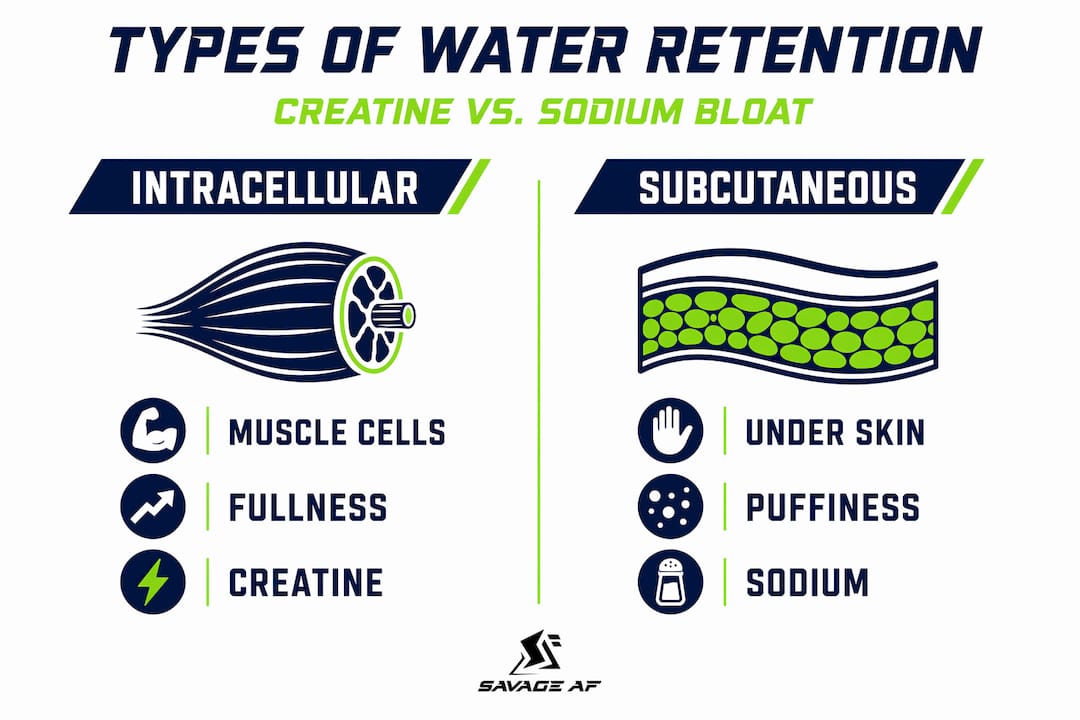
Creatine causes intracellular hydration, which produces muscle fullness and density rather than subcutaneous bloating. When your muscles are full of water, they look bigger. When you have subcutaneous water, you look soft regardless of how lean you are. Those are opposite outcomes.

If you are retaining water on creatine and you look puffy rather than full, look at your sodium intake first. Look at your carbohydrate spikes. Look at whether you are sleeping enough. Creatine is almost certainly not the culprit for that soft appearance. Bodybuilders who report creatine bloating are often dealing with cofactors like high-sodium diets or aggressive carb loading stacked on top of creatine, not the creatine itself.
Pro Tip: If you want to verify whether creatine is actually making you look softer, eliminate high-sodium processed foods for one week while staying on creatine. In most cases, the puffiness disappears while the muscle fullness remains.
The practical signs that you are experiencing normal creatine-related intracellular hydration include a tighter, fuller look to your muscles, a slight increase in bodyweight without visible subcutaneous puffiness, and improved muscle pumps during training. Those are wins, not problems.
Loading, dosing, and how timing affects water weight
How you dose creatine determines how fast and how dramatically water retention shows up on the scale.
- Loading phase (20g per day for 5 to 7 days): This floods your muscle cells with creatine rapidly. Typical early weight gain under a loading protocol is 2 to 3 kg, with most of it showing up in the first week. The scale jump is real and fast.
- Maintenance dosing (3 to 5g per day, no load): Creatine saturation builds gradually over 3 to 4 weeks. The total intracellular water accumulation ends up at the same place, but the scale moves slower. Maintenance dosing prevents the front-loaded intracellular water shift that startles first-time users.
- Peak water weight range: Each gram of creatine pulls approximately 2.7 grams of water into muscle cells. Across a full loading cycle, that averages out to 1 to 2 kg of intracellular water weight during early supplementation.
- What happens when you stop: When you discontinue creatine, muscle creatine stores deplete over several weeks. Intracellular water retention reverses gradually over 4 to 6 weeks as the osmotic gradient fades.
- Managing timing for competition or aesthetics: If you have a physique show, a photo shoot, or any event where you need to control scale weight, skipping the loading phase and going straight to a low maintenance dose gives you the performance benefits with a slower, more gradual hydration ramp-up.
The bottom line is simple. You control how fast this happens by controlling your protocol. Loading is not mandatory. It is a speed option, not a requirement.
The performance and anabolic payoff of creatine hydration
Here is where the real story lives. Water retention from creatine is not a tolerated side effect you deal with to get the strength benefits. The water retention is part of the strength and growth mechanism.
- Anabolic cell swelling: Cell swelling from creatine activates the mTOR pathway, a primary driver of muscle protein synthesis. Your body reads a swollen cell as a signal that it needs to build more structural tissue. Hydration equals growth signal.
- Fat-free mass increases: Intracellular water contributes to fat-free mass gains during creatine supplementation. Short-term lean mass increases partly reflect water, but longer-term gains require resistance training and real muscle protein accretion. Creatine creates the environment for that to happen faster.
- Strength performance: Fully hydrated muscle cells have more immediate access to creatine phosphate for ATP regeneration during high-intensity sets. More stored creatine, faster energy replenishment, more reps at heavier weights.
- Thermoregulation during training: Intracellular hydration improves heat tolerance during intense sessions. Dehydrated muscle cells fatigue faster and overheat sooner. Creatine keeps your cells primed and temperature-regulated when you are grinding through your heaviest sets.
- The compound effect: The osmolyte function of creatine is an inherent, beneficial mechanism, not a random side effect. Every drop of water pulled into your muscle is there for a biochemical reason. Own it.
Serious trainees should stop apologizing for the scale going up on creatine. Your muscles are fuller. They are more anabolically primed. They are performing better. The number on the scale is the least relevant metric in that equation.
My take: creatine water retention is a weapon, not a weakness
I’ve watched too many people quit creatine in the first two weeks because the scale freaked them out. They saw three pounds and immediately assumed it was fat. They stopped taking one of the most well-researched supplements in sports nutrition history because they did not understand what was happening inside their cells.
In my experience, the lifters who understand creatine’s mechanism are the ones who commit to it long enough to actually see the strength and size gains compound. The water in your muscles is not padding. It is infrastructure. It is your cells creating the anabolic environment for growth to follow.
What most people miss about cell volumization is that the fullness you feel in your muscles on creatine is not temporary vanity. It is a physiological state that supports more work, better pumps, and faster recovery. When I started viewing the water weight as part of the performance architecture instead of a cosmetic nuisance, everything clicked.
If the scale jump genuinely bothers you, skip the loading phase. Go straight to 5 grams a day. The saturation happens either way, just slower. But do not ditch the compound altogether because of a number that has nothing to do with body fat.
Creatine water retention is your edge. Use it.
— Ronnie Savoie
Fuel your gains with Savageaf creatine
You now know the science. Time to put it to work.

Savageaf builds creatine products for athletes who train without excuses and expect results. The Savage AF Max Muscle Pure Creatine Formula delivers clean, pure creatine monohydrate to maximize intracellular hydration and volumization with every dose. If you want creatine without the mess, the Beast Bites Creatine Gummies give you a precise dose you can chew anywhere. Grab your pre-workout, stack your recovery, and shop the full lineup of performance supplements built for the people who refuse to stay average. Chew, grind, dominate.
FAQ
Why does creatine make you gain water weight?
Creatine acts as an osmolyte inside muscle cells, raising intracellular solute concentration and pulling water inward through osmosis. This causes muscle cell volumization, which registers as weight gain on the scale.
Does creatine cause bloating and puffiness?
Creatine causes intracellular water retention, not subcutaneous bloating. Puffiness and soft appearance are typically caused by sodium, hormones, or alcohol, not creatine.
How much water weight does creatine add?
Early creatine supplementation typically adds 1 to 2 kg of intracellular water weight, with loading protocols producing gains closer to 2 to 3 kg in the first week.
Can you reduce water retention from creatine?
Skipping the loading phase and using a maintenance dose of 3 to 5 grams daily spreads water retention over several weeks, reducing the abrupt early scale jump without sacrificing the end result.
How long does creatine water retention last after stopping?
Once you stop supplementing creatine, intracellular water weight gradually decreases over 4 to 6 weeks as muscle creatine stores deplete and the osmotic gradient fades.


