


Your joints hurt, you’ve heard collagen can help, and now you’re staring at a wall of supplements wondering what’s actually true. The role of collagen in joints is one of the most misunderstood topics in sports nutrition, and that confusion costs people money, time, and results. Here’s the reality: collagen doesn’t work like a spare part you swallow and ship directly to your knee. The science is more interesting than that, and once you understand how it actually works, you can make smarter choices for your joint health and recovery. This article breaks it all down, no fluff, no guesswork.
Table of Contents
- Key Takeaways
- The role of collagen in joints, explained
- How your body actually processes collagen
- What the science says about collagen and joint discomfort
- How to actually use collagen for joint health
- My take on collagen and joint longevity
- Build joints that keep up with you
- FAQ
Key Takeaways
| Point | Details |
|---|---|
| Collagen is structural scaffolding | Type II collagen forms the backbone of cartilage, giving joints their cushion and flexibility. |
| Two mechanisms, two supplement forms | Undenatured type II collagen works through immune signaling; hydrolyzed peptides stimulate cartilage cell activity. |
| Digestion changes everything | Your body breaks collagen down before absorbing it, so the form of supplement you take determines how it works. |
| Patience is non-negotiable | Clinical studies show benefits emerge after 8 to 24 weeks of consistent daily use. |
| Lifestyle amplifies results | Vitamin C, movement, and nutrition support your body’s own collagen production far more than supplements alone. |
The role of collagen in joints, explained
Collagen is the most abundant protein in your body. It’s the structural framework holding your connective tissues together, and in your joints, it’s doing some of the heaviest lifting of all.
Your joints contain several types of collagen, but type II collagen is the star player. It makes up roughly 90% of the collagen found in articular cartilage, the smooth, slippery tissue that covers the ends of your bones and absorbs shock with every step, squat, and sprint. Without it, bone grinds against bone. That’s not a metaphor. That’s arthritis.
Here’s what type II collagen actually does inside your joints:
- Provides tensile strength: It resists the pulling and compression forces your joints face during movement and loading.
- Maintains cartilage structure: Collagen fibers form a mesh that traps water and proteoglycans, keeping cartilage hydrated and resilient.
- Supports ligaments and tendons: Type I collagen dominates these tissues, giving them the toughness to handle explosive movement without tearing.
- Enables joint flexibility: The elasticity of collagen fibers allows joints to move through full ranges of motion without damage.
Here’s the part most people miss. Cartilage is avascular tissue, meaning it has no direct blood supply. Nutrients reach it through synovial fluid diffusion, a slow, passive process. That’s why cartilage repairs so slowly compared to muscle or skin. It’s not that your body doesn’t want to fix the damage. It’s that the delivery system is inherently limited. This is why collagen production in joints matters so much, and why protecting what you have is smarter than trying to rebuild from scratch.
How your body actually processes collagen
This is where most supplement marketing gets it wrong, and where you need to pay attention.
When you swallow a collagen supplement, your digestive system doesn’t recognize it as “joint material” and route it straight to your knees. Intact collagen doesn’t reach joints directly. Your stomach and small intestine break it down into amino acids and short peptides, just like any other protein. So how does supplementation actually help? Through two distinct mechanisms, depending on the form you take.
Hydrolyzed collagen peptides
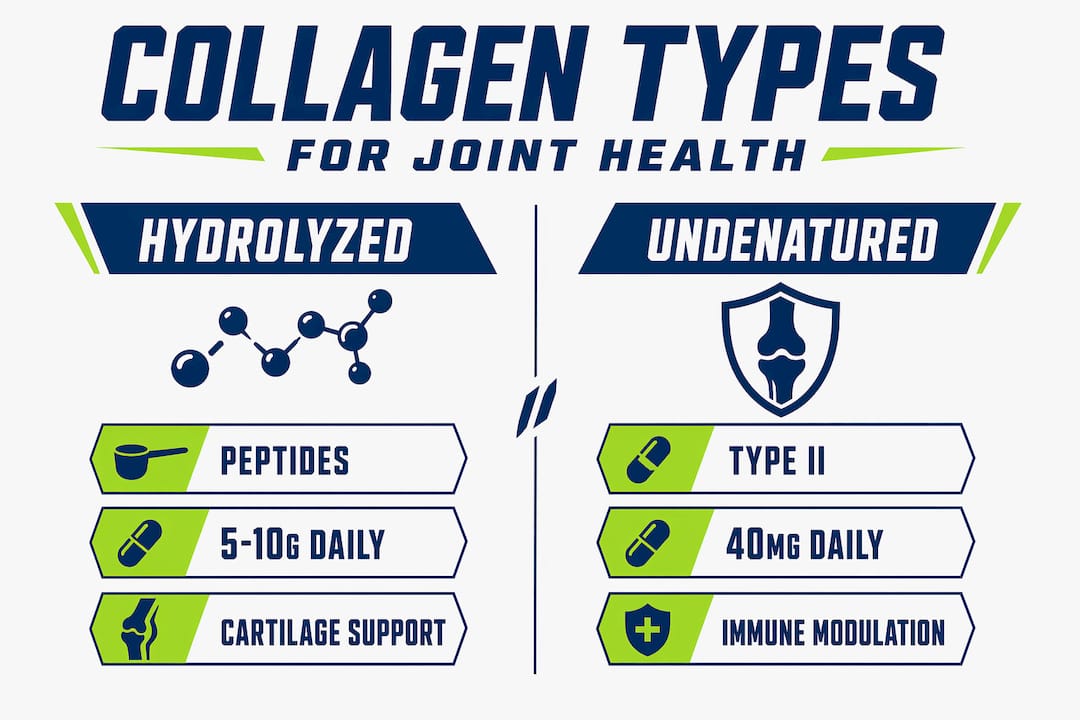
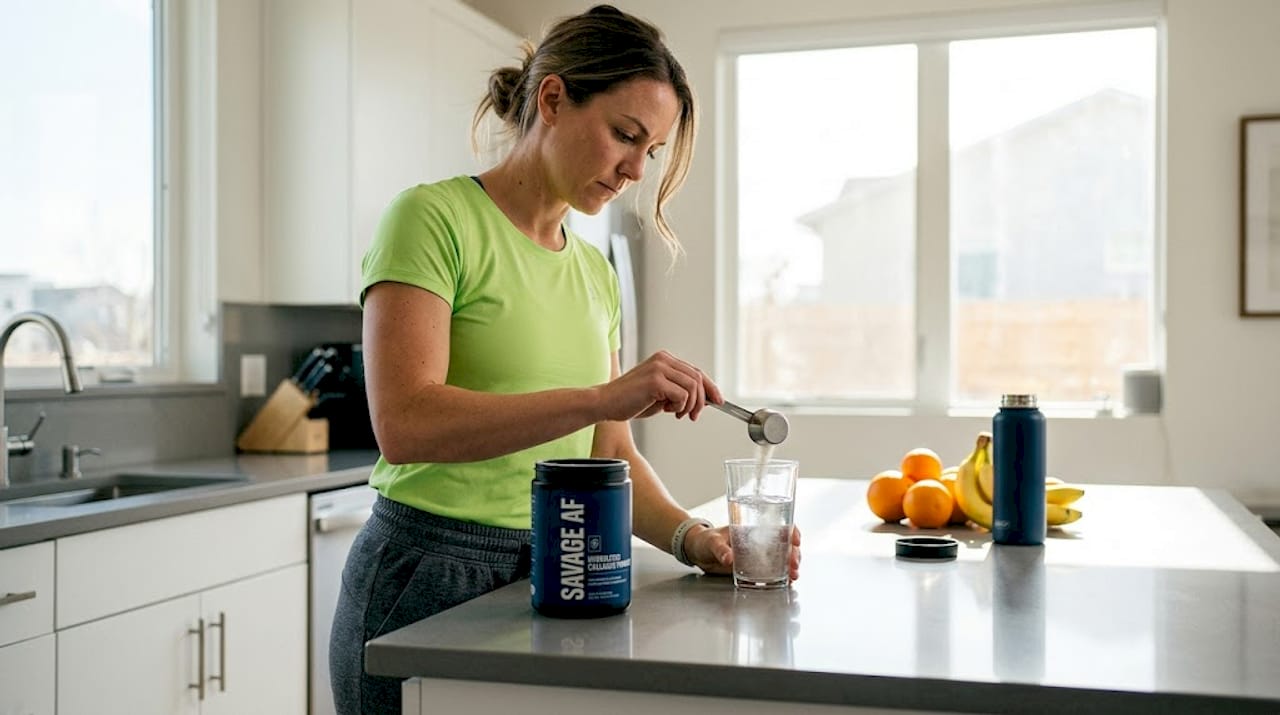
Hydrolyzed collagen is collagen that’s been pre-broken down into smaller peptides through enzymatic processing. These peptides are absorbed efficiently into the bloodstream. Once circulating, hydrolyzed peptides stimulate chondrocytes, the cells responsible for producing and maintaining cartilage matrix. Think of it as sending a signal that says “build more.” Specific bioactive peptides like Fortigel have shown structural cartilage benefits in MRI studies. Effective doses sit at 5 to 10 grams daily.
Critically, peptide size matters more than source. Whether the collagen comes from bovine hide, marine fish, or chicken sternum is far less important than whether it’s been properly hydrolyzed into bioavailable peptides.
Undenatured type II collagen
This form works through a completely different mechanism called oral tolerization. At just 40mg daily, undenatured type II collagen interacts with immune cells in your gut lining. Oral tolerization modulates immune response, essentially training your immune system to stop attacking cartilage tissue. It’s not a building block. It’s an immune signal. This is why the dose is so much lower than hydrolyzed peptides, and why confusing the two forms leads to wasted money.
| Form | Mechanism | Daily Dose | Best For |
|---|---|---|---|
| Hydrolyzed collagen peptides | Stimulates chondrocyte activity | 5 to 10g | Cartilage building, recovery support |
| Undenatured type II collagen | Oral tolerization, immune modulation | 40mg | Reducing cartilage degradation, joint protection |
Pro Tip: Don’t combine undenatured type II collagen with a large protein meal. It works through immune signaling in the gut, and taking it on an empty stomach or away from meals may improve its tolerization effect.
What the science says about collagen and joint discomfort
The research on collagen supplements for joints is real, but you need to read it with clear eyes.
A review of 113 clinical trials found that collagen supplementation produces real, statistically significant improvements in joint pain and muscle health, particularly in osteoarthritis and exercise-related stress. The effects are described as moderate, not miraculous. That’s honest science, not a sales pitch.
A 180-day randomized study showed that 40mg daily of undenatured type II collagen improved joint function and pain scores in healthy volunteers experiencing exercise-related joint discomfort, with measurable improvements in KOOS scores versus placebo after six months.
Here’s what the evidence consistently shows:
- Collagen benefits for joints appear most clearly in people with mild to moderate discomfort or exercise-induced joint stress.
- Benefits require 8 to 24 weeks of consistent daily supplementation before they become noticeable.
- Joint function, pain levels, and quality of life all show improvement in non-osteoarthritic individuals.
- Combining hydrolyzed peptides with undenatured type II collagen may offer synergistic benefits by targeting both cartilage building and immune modulation simultaneously.
“Collagen supplements are best understood as long-term maintenance tools for mild symptoms and prevention, not fast fixes for advanced joint disease.” This framing, backed by clinical evidence on realistic expectations, should anchor every purchasing decision you make.
If you’re dealing with severe joint damage or advanced osteoarthritis, collagen supplementation alone won’t reverse that. It’s not designed to. But for the athlete grinding through knee aches, the lifter feeling it in their hips, or anyone trying to stay ahead of joint wear, the evidence is genuinely encouraging.
You can also explore joint support supplements to find clinically supported options that fit your specific needs.
How to actually use collagen for joint health
Knowing the science is one thing. Putting it to work is another. Here’s how to do it right.
-
Choose the right form for your goal. If you want to support cartilage structure and recovery, go with hydrolyzed collagen peptides at 5 to 10 grams daily. If your goal is reducing joint degradation and modulating inflammation, add 40mg of undenatured type II collagen taken separately.
-
Stack with vitamin C. Vitamin C is a critical cofactor in collagen synthesis. Without adequate vitamin C, your body can’t properly produce or cross-link collagen fibers. Eat citrus, bell peppers, and leafy greens, or supplement with 500mg to 1000mg daily alongside your collagen.
-
Keep moving. Cartilage gets its nutrients through synovial fluid, and synovial fluid circulates through movement. Low-impact exercise like cycling, swimming, and walking keeps that fluid moving and delivers nutrients where they’re needed. Sitting still is the enemy of cartilage health.
-
Be patient and consistent. This is the one most people fail at. Daily supplementation for several months is required to see results. Missing days, cycling on and off, or expecting results in two weeks will leave you disappointed and convinced collagen doesn’t work.
-
Don’t rely on food sources alone. Bone broth and collagen-rich foods provide amino acids, but the concentrations and specific peptide profiles needed for joint benefits are difficult to hit through diet alone. Targeted supplementation fills the gap.
-
Support your whole system. Protein intake, sleep, stress management, and overall nutrition all affect how well your body produces and maintains collagen. Supplements work best when the foundation is solid.
Pro Tip: Take your hydrolyzed collagen peptides within 30 to 60 minutes before or after exercise. Some research suggests this timing may direct more of those bioactive peptides toward active connective tissue repair.
My take on collagen and joint longevity
I’ve watched a lot of people go through the same cycle. They buy collagen, take it for three weeks, feel nothing, and write it off as garbage. Then they go back to grinding through joint pain and wondering why their body is falling apart.
Here’s what I’ve learned: the people who get results from collagen are the ones who treat it like training, not medication. You don’t expect three weeks of squats to build a world-class posterior chain. You don’t expect three weeks of collagen to rebuild years of joint wear either.
What I’ve found is that the biggest mistake isn’t choosing the wrong product. It’s having the wrong mental model. Most people think of collagen as a repair crew that shows up and patches the damage. The real picture is more like a long-term maintenance contract. You’re keeping the infrastructure strong so catastrophic failure doesn’t happen.
I’ve also seen people ignore the lifestyle side completely and wonder why their expensive supplements aren’t moving the needle. Collagen synthesis doesn’t happen in a vacuum. Supporting your body’s own production through diet, movement, and sleep is what separates people who feel great at 45 from people who feel wrecked at 35.
The future of joint health is genuinely exciting too. Emerging research on cartilage regeneration is exploring how to reactivate the body’s innate repair pathways, which could change everything we know about joint recovery. But that’s tomorrow. Today, you’ve got proven tools. Use them with patience and consistency, and they will work.
— Savage
Build joints that keep up with you
You’ve got the knowledge. Now it’s time to back it up with the right tools.
Savageaf is built for people who don’t quit, and that includes people who refuse to let joint discomfort slow them down. Whether you’re a gym warrior putting your knees through hell five days a week or an everyday grinder who just wants to move without pain, the right collagen support makes a real difference. Check out the full lineup of performance supplements at Savageaf, including collagen peptide options dosed at clinically supported levels. If you want targeted collagen peptide support with key nutrients that feed your connective tissue, Vital Glow collagen peptides is where to start. No excuses. Joints built to last.
FAQ
What does collagen do for your joints?
Collagen provides the structural framework for cartilage, tendons, and ligaments, giving joints their cushion, tensile strength, and flexibility. Type II collagen is the primary form found in articular cartilage and is critical for absorbing impact and maintaining smooth joint movement.
What type of collagen is best for joint pain?
Type II collagen, either as undenatured collagen at 40mg or hydrolyzed collagen peptides at 5 to 10 grams daily, shows the strongest evidence for joint discomfort. Undenatured type II collagen works through immune modulation, while hydrolyzed peptides stimulate cartilage cell activity.
How long does collagen take to work for joints?
Most clinical studies show measurable improvements after 8 to 24 weeks of consistent daily supplementation. Results are gradual, not overnight, so patience and daily consistency are non-negotiable for seeing real benefits.
Can collagen supplements reverse joint damage?
Collagen supplements are not a cure for advanced joint damage or severe osteoarthritis. The evidence supports their use for mild to moderate discomfort, exercise-related joint stress, and long-term joint maintenance rather than reversing significant structural damage.
Does vitamin C affect collagen production in joints?
Yes. Vitamin C is a required cofactor in collagen synthesis, meaning your body cannot properly produce or stabilize collagen fibers without it. Pairing collagen supplements with adequate vitamin C intake through diet or supplementation directly supports joint tissue maintenance.


