


Mushroom coffee is defined as a functional beverage that blends ground coffee with adaptogenic mushroom extracts, most commonly cordyceps, lion’s mane, reishi, and chaga, to deliver performance-enhancing compounds beyond what caffeine alone provides. The benefits of mushroom coffee for fitness go far beyond a morning energy hit. You get sustained endurance, sharper focus, faster recovery, and a cleaner stimulant profile that keeps you locked in without wrecking your nervous system. Athletes and gym warriors are adopting functional mushroom supplements at a serious rate, and the science behind species like Cordyceps militaris and Hericium erinaceus (lion’s mane) backs the hype. This is not your grandma’s herbal tea. This is performance fuel.
1. Benefits of mushroom coffee fitness: cordyceps and endurance
Cordyceps militaris is the most studied functional mushroom for athletic performance, with consistent evidence for improving VO2max, ventilatory threshold, and time to exhaustion in human subjects. That means your aerobic engine runs harder and longer before it redlines. For runners, cyclists, MMA fighters, and anyone grinding through high-volume training blocks, that edge is real.
The mechanism is oxygen efficiency. Cordyceps supports ATP production at the cellular level and improves how your body uses available oxygen during sustained effort. A 2026 MDPI narrative review confirmed aerobic performance gains from cordyceps supplementation but flagged variability in study design and extract standardization as factors affecting exact effect sizes. The takeaway: the benefit is there, but product quality determines how much you actually feel it.
- Improved VO2max supports longer, harder aerobic sessions
- Enhanced ventilatory threshold delays the point where breathing becomes limiting
- Better oxygen utilization means less fatigue at the same intensity
- Lactate clearance improvements help you recover between hard intervals
Pro Tip: Cordyceps works cumulatively, not acutely. Treat it like creatine cycling. Commit to daily intake across a full training block of at least two to four weeks before judging results.
2. Lion’s mane and the mind-muscle connection
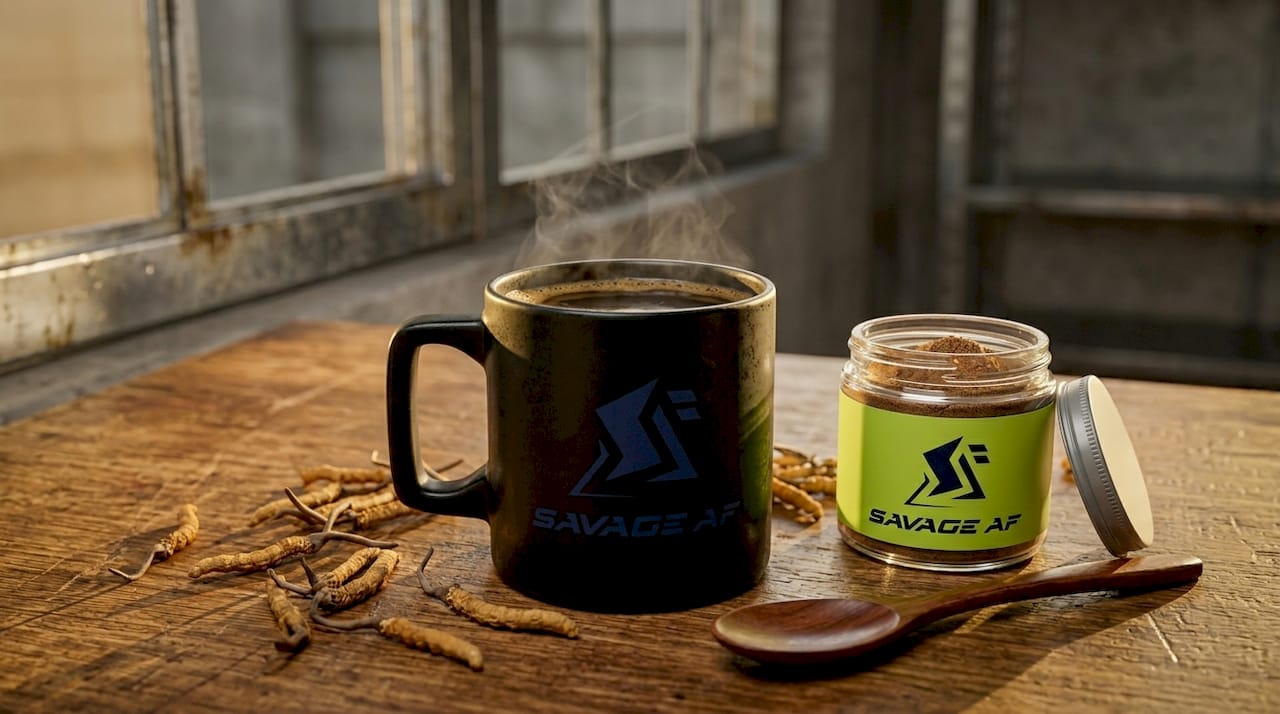
Lion’s mane (Hericium erinaceus) is the cognitive weapon in your mushroom coffee stack. It stimulates nerve growth factor (NGF) production, which supports neuroprotection, synaptic plasticity, and sustained mental clarity. For athletes, that translates to sharper focus during complex lifts, better mind-muscle connection, and reduced brain fog on back-to-back training days.
Dietitian-tested reviews report that sustained focus improvements from lion’s mane blends appear after consistent daily use, not from a single cup. This is the critical difference between lion’s mane and caffeine. Caffeine spikes your alertness fast and crashes hard. Lion’s mane builds a steadier cognitive baseline over time, and when you combine both in mushroom coffee, you get the immediate kick plus the sustained mental edge.
- NGF stimulation supports long-term brain health and focus
- Reduced brain fog means cleaner decision-making under fatigue
- Synergy with caffeine creates a fast-onset plus sustained attention effect
- Neuroprotective properties matter for contact sport athletes absorbing repeated impact
Pro Tip: Select mushroom coffee products that specify fruiting body extracts rather than mycelium on grain. Fruiting bodies carry significantly higher concentrations of active compounds like hericenones and erinacines.
3. Reishi and chaga for recovery and immune resilience
Reishi and chaga are the recovery operators in a functional mushroom blend. Both contain beta-glucans and polyphenols that reduce chronic inflammation, the kind that accumulates across hard training weeks and quietly destroys your performance and joint health. Controlling that inflammation is not optional. It is the difference between consistent training and forced rest days.
Reishi acts as an adaptogen that activates the parasympathetic nervous system, the rest-and-digest mode your body needs to actually rebuild after you destroy it in the gym. Chaga carries one of the highest antioxidant capacities of any natural food source, protecting cells from oxidative stress generated during intense exercise. Together, they form a recovery shield that keeps your immune system functional even when training volume spikes.
Hard training suppresses immune function temporarily. Athletes who neglect recovery-phase nutrition get sick at the worst times. Reishi and chaga in your daily mushroom coffee routine address this directly, not as a luxury, but as a performance necessity.
Beta-glucan-rich mushrooms like turkey tail also contribute to gut microbiome health, and gut health directly influences energy output, nutrient absorption, and systemic inflammation in athletes. Your gut is your second engine. Feed it accordingly.
4. Mushroom coffee vs. traditional pre-workout supplements
Mushroom coffee and traditional pre-workouts solve different problems. Knowing which one you need on a given day separates smart athletes from supplement-confused ones.
| Feature | Mushroom coffee | Traditional pre-workout |
|---|---|---|
| Caffeine content | 30 to 75 mg per serving | 150 to 300+ mg per serving |
| Energy profile | Smooth, sustained, adaptogen-supported | Fast spike, potential crash |
| Jitter risk | Low | Moderate to high |
| Focus support | Lion’s mane NGF stimulation | Caffeine plus nootropic blends |
| Recovery support | Reishi, chaga anti-inflammatory | Minimal |
| Creatine or beta-alanine | No | Often yes |
| Best for | Moderate to high intensity, daily use | Maximal output, competition day |
Mushroom coffee contains less caffeine than regular coffee, typically 30 to 75 mg per serving versus 100 mg or more in a standard cup. That lower stimulant load means reduced cortisol spikes and fewer jitters, which matters when you train twice a day or need to sleep hard for recovery. The adaptogens in cordyceps and reishi complement the caffeine rather than amplifying its downsides.
Where mushroom coffee falls short is maximal output. If you need beta-alanine for muscular endurance, creatine for power output, or 250 mg of caffeine to hit a PR, a traditional pre-workout formula is the right call. Mushroom coffee is not a replacement for every scenario. It is the smarter daily driver, and a dedicated pre-workout is the race car you pull out for competition day.
- Use mushroom coffee for daily training sessions requiring focus and sustained energy
- Stack with a stimulant-free pre-workout like Primal Surge for pump and endurance without overstimulation
- Reserve high-stimulant pre-workouts for peak performance days
- Monitor cortisol and sleep quality as indicators of stimulant load management
5. How mushroom coffee supports gut health and energy metabolism
Turkey tail mushrooms, found in select mushroom coffee blends, deliver beta-glucan fiber compounds that feed beneficial gut bacteria and reduce intestinal inflammation. This matters for athletes because gut health directly controls nutrient absorption efficiency, meaning the protein, carbs, and micronutrients you eat actually reach your muscles at a higher rate when your gut microbiome is functioning well.
Systemic inflammation originating in the gut is a silent performance killer. It elevates baseline cortisol, impairs sleep quality, and slows recovery between sessions. Functional mushroom blends that include turkey tail or chaga address this at the root, not just the symptom. Think of it as infrastructure maintenance for your performance engine.
The functional fungi compounds in mushroom coffee also support mitochondrial efficiency, which is the cellular mechanism behind sustained energy output during prolonged training. More efficient mitochondria mean more ATP per unit of oxygen consumed. That is a direct performance advantage for endurance athletes and anyone running high-volume training programs.
6. Practical tips for integrating mushroom coffee into your training routine
Product quality is the single biggest variable in whether mushroom coffee delivers results. Product effectiveness depends heavily on mushroom species, extraction method, beta-glucan content, and dose. A product that lists “mushroom powder” without specifying fruiting body extract and beta-glucan percentage is likely underdosed and unreliable.
- Choose products specifying cordyceps and lion’s mane as fruiting body extracts with quantified beta-glucan content
- Commit to at least two to four weeks of daily consumption before evaluating performance changes
- Consume pre-workout or first thing in the morning for maximum focus and endurance priming
- Pair with balanced macronutrition and a structured recovery protocol, not as a standalone fix
- Monitor for digestive sensitivity in the first week, particularly if you have a sensitive gut
Pro Tip: Track your training metrics, session RPE, rep counts, and sleep quality during your first four-week mushroom coffee block. Cordyceps benefits are cumulative and subtle. Without data, you will miss the gains.
Timing matters. Consuming mushroom coffee 30 to 60 minutes before training gives cordyceps time to prime oxygen utilization pathways while caffeine hits its peak. Morning use also aligns with natural cortisol rhythms, amplifying alertness without fighting your biology. Explore the mushroom coffee range at Savageaf to find blends built specifically for training performance.
Key takeaways
Mushroom coffee delivers fitness benefits through cordyceps-driven endurance gains, lion’s mane cognitive support, and reishi and chaga recovery properties, but only when you choose quality products and commit to consistent daily use over training blocks.
| Point | Details |
|---|---|
| Cordyceps drives endurance | Improves VO2max and time to exhaustion with consistent supplementation over weeks. |
| Lion’s mane sharpens focus | Stimulates nerve growth factor for sustained mental clarity and mind-muscle connection. |
| Reishi and chaga aid recovery | Beta-glucans reduce inflammation and support immune resilience during hard training cycles. |
| Product quality is everything | Choose fruiting body extracts with quantified beta-glucan content for reliable results. |
| Commit to the full block | Benefits are cumulative. Two to four weeks minimum before judging performance impact. |
Why I stopped dismissing mushroom coffee after six weeks of hard data
I’ll be straight with you. My first reaction to mushroom coffee was skepticism. It sounded like something sold at a farmers market next to crystals and essential oils. Then I ran a six-week test during a high-volume training block, tracked every session, and the numbers changed my mind.
The endurance gains were not dramatic. They were consistent. My aerobic threshold sessions felt less labored in weeks four through six. My focus during technical lifts was noticeably cleaner, less mental drift, more intentional reps. Sleep quality improved, which I attribute to the lower caffeine load and reishi’s calming effect on my nervous system after evening sessions.
What I respect about the research is its honesty. The ergogenic evidence for cordyceps is promising but not guaranteed, and effect sizes vary by product and individual. That is not a reason to dismiss it. That is a reason to be smart about product selection and patient with the timeline. Mushroom coffee is not a magic bullet. It is a daily performance habit that compounds over time, exactly like training itself.
If you are serious about your craft, whether that is the platform, the stage, or the street, you do not leave marginal gains on the table. Functional mushrooms are a marginal gain worth taking.
— Ronnie Savoie
Fuel your training with Savageaf performance supplements
You now know what mushroom coffee brings to the table. The next move is stacking it with a performance formula built for athletes who do not accept average.
Savageaf’s performance supplement collection is engineered for gym warriors, endurance athletes, and performers who need clean energy, muscle support, and recovery that keeps pace with their intensity. If you want pump and endurance without stimulant overload, the Primal Surge No-Stim Pre-Workout pairs perfectly with your morning mushroom coffee ritual. No excuses. No ceiling. Attack every session like it counts.
FAQ
What are the main fitness benefits of mushroom coffee?
Mushroom coffee delivers endurance support via cordyceps, cognitive focus via lion’s mane, and recovery support via reishi and chaga. These benefits compound over consistent daily use across training blocks rather than from a single serving.
How long does it take for mushroom coffee to work for athletes?
Cumulative effects from cordyceps and lion’s mane typically require two to four weeks of daily intake to become noticeable. Treat it like creatine loading, not a one-shot stimulant.
Is mushroom coffee healthy for serious gym-goers?
Mushroom coffee is considered healthy for fitness use because it contains lower caffeine than regular coffee, typically 30 to 75 mg per serving, plus anti-inflammatory and immune-supporting compounds from reishi and chaga that benefit athletes under high training loads.
Can mushroom coffee replace a pre-workout supplement?
Mushroom coffee works well for daily moderate to high-intensity training but does not replace traditional pre-workouts for maximal output sessions requiring beta-alanine, creatine, or high-dose caffeine. Use both strategically based on training demands.
Which mushroom species matter most for workout performance?
Cordyceps militaris is the top species for endurance and oxygen utilization. Lion’s mane supports focus and mind-muscle connection. Reishi and chaga handle recovery and inflammation control. Products containing all four in fruiting body extract form offer the broadest fitness advantages.


